
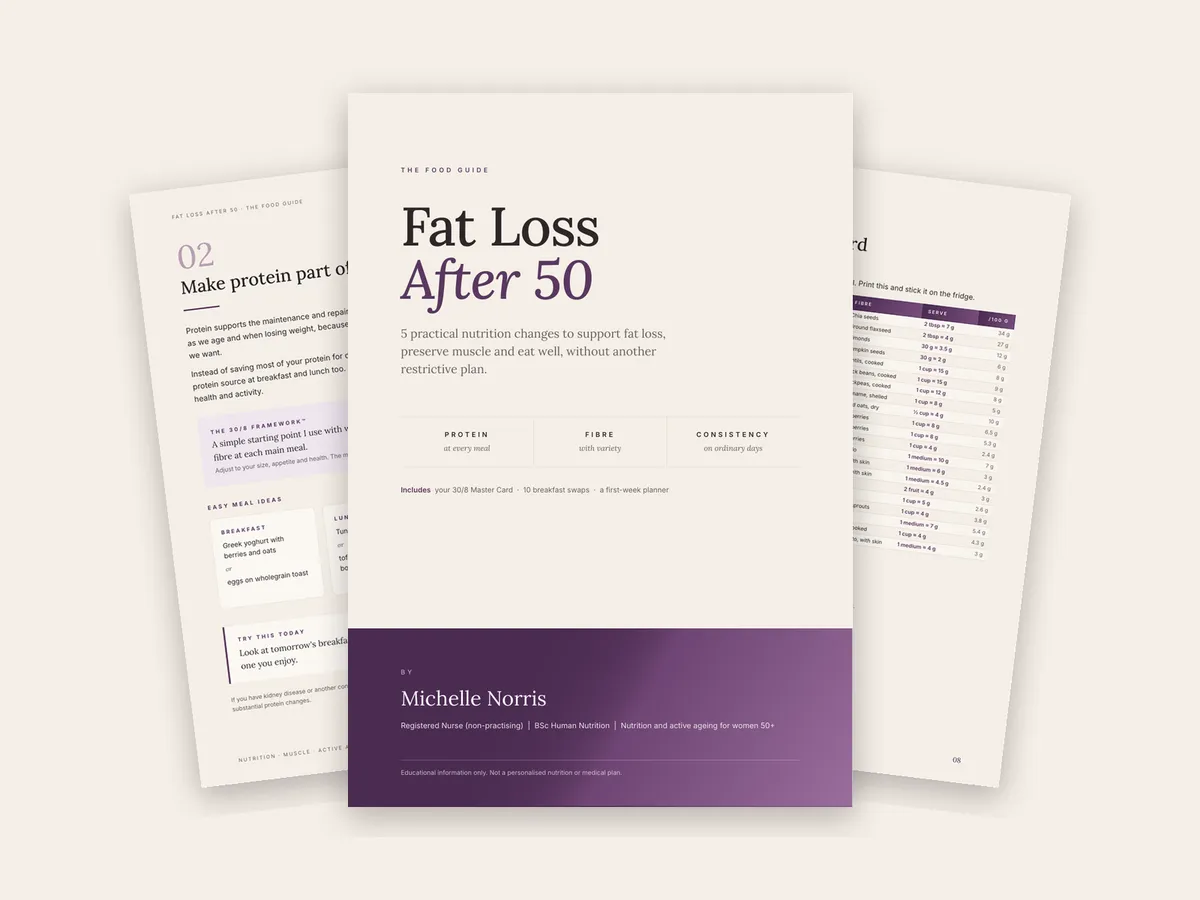
Weight Gain After 50 Has 3 Metabolic Drivers. Find Yours.
It's not willpower. It's biology.
Start with my FREE Starting Point Quiz and understand how your menopause metabolism and hormones actually work, so weight loss and wellbeing finally make sense.
If Nothing Seems To Work Anymore, It’s Not A Willpower Problem
Your body has changed. Your nutrition approach needs to change with it
Many women over 50 find that weight gain, low energy, and stubborn symptoms appear even when they’re doing everything “right.” Diets that once worked stop delivering results. Restriction becomes exhausting. Michelle Norris teaches DNA Nutrition because the real issue isn’t effort. It’s that most plans ignore how menopause and individual biology affect metabolism and hormones. When you support your biology instead of fighting it, clarity returns and progress becomes sustainable again.


DNA Nutrition tools designed for real life after 45
Explore practical resources created by Michelle Norris to help you understand your DNA-driven metabolism and apply it through personalized nutrition and lifestyle alignment.
Work with Michelle inside a DNA Nutrition framework
The Menopause DNA Alignment System offers personalized, biology-based guidance designed to support metabolic health, hormone balance, and lasting wellbeing without restriction.

Thoughtful guidance on menopause, metabolism, and DNA Nutrition
Insights from Michelle Norris on how hormones, DNA, and lifestyle alignment influence weight, energy, and health after 50.
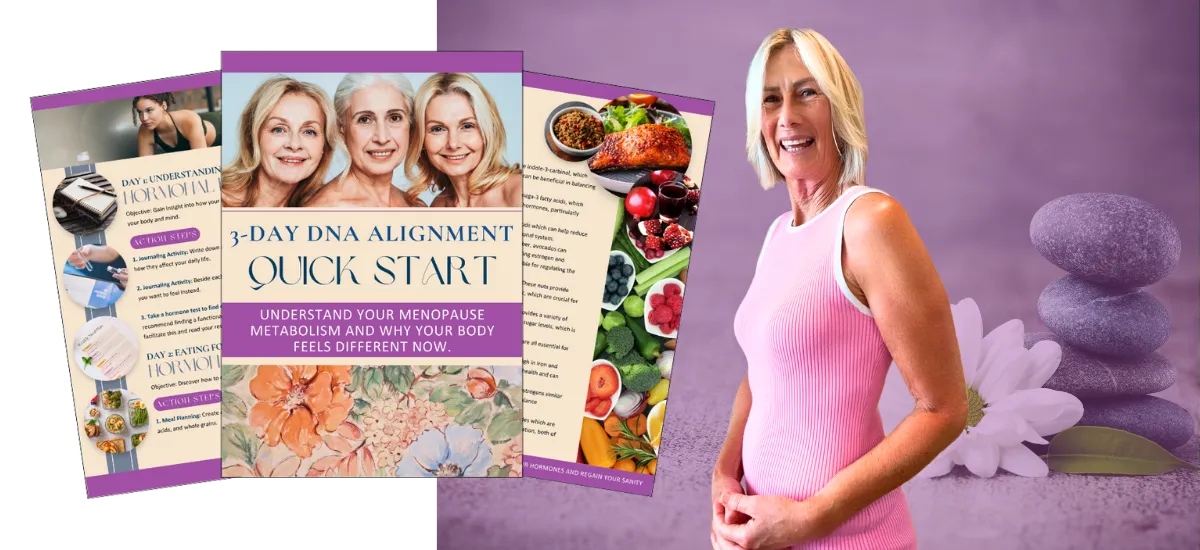
Free
Starting Point Quiz

Meet
Michelle Norris
founder of DNA Nutrition
Michelle Norris helps women over 45 restore metabolic and hormonal health through DNA-guided nutrition and lifestyle alignment. Her approach focuses on understanding how individual biology influences weight, energy, mood, and metabolism during menopause. Rather than one-size-fits-all plans, Michelle’s DNA Nutrition framework begins with clarity, creates early wins, and supports long-term wellbeing. The goal isn’t short-term dieting. It’s helping women feel like themselves again and build health that lasts.
“I’m much more confident I’ll get to where I’d like to end up, using the 30/8 approach.”
I’m in my mid-60s and getting a lot out of it. What I appreciate is that you make all that science easy to understand, and all the steps do-able. Since I’ve figured out that I need to pay special attention to my blood sugar, the needle is finally moving, little by little. Phew!
- Anne Reilly, Sydney, Australia
Read The Newsletter
The Three Reasons You Can't Lose Weight After 45 — And Why None Of Them Are Your Fault
The Three Reasons You Can't Lose Weight After 45 — And Why None Of Them Are Your Fault
You are eating well. You have cut back. You are moving more than you used to. And your body is simply not responding the way it did ten years ago.
If that is your reality right now, I want to say something clearly before we go any further: you are not failing. You are not lazy. You do not have a willpower problem.
You have a biology problem. And biology is something we can actually work with.
The rules of fat loss changed at 45. Not because your body turned against you — because your hormones shifted, and nobody updated the instruction manual.
I am a menopause and longevity nutritionist specialising in DNA-based coaching for women over 45. I work with women every day who are doing everything right by the old rules and getting nowhere. The missing piece is almost always the same — nobody told them that the rules changed.
In this post I am going to walk you through the three specific biological reasons fat loss becomes harder after 45, why they are not your fault, and what your DNA type reveals about which of these is your dominant challenge.
Let’s start with the one that surprises most women the most.
· · ·
REASON 01
Your Insulin Sensitivity Changed — And Nobody Told You
Before perimenopause, estrogen was quietly doing something remarkable in the background. It was keeping your cells sensitive to insulin — meaning when you ate carbohydrates, your body used them efficiently as fuel.
Insulin sensitivity is one of the most important metabolic factors in your body. When your cells respond well to insulin, food gets used. When insulin sensitivity declines, food gets stored.
Estrogen was one of your body's primary insulin-sensitising hormones. When it declines, your insulin sensitivity declines with it — often significantly and rapidly.
This is why the same meal that gave you energy at 35 can trigger an energy crash, brain fog and fat storage around your middle at 47. It is not the food that changed. It is the hormonal environment your food is landing in.
What this looks like in real life
You eat what feels like a reasonable breakfast — maybe yoghurt and fruit, or toast with a little butter — and by 10:30am you are exhausted and craving something sweet. You eat a light lunch and feel heavy and sluggish an hour later. You have been cutting calories but the weight around your abdomen is not shifting.
These are classic signs of insulin sensitivity changes after estrogen decline. They are biological. They are not personal.
What actually helps
The single most impactful shift for insulin sensitivity after 45 is protein first at every meal. When you eat protein before carbohydrates, you slow the absorption of glucose into your bloodstream and dramatically reduce the insulin response.
Thirty grams of protein at your first meal of the day — eggs, Greek yoghurt, smoked salmon, chicken — changes your blood sugar response for the entire day. Not just breakfast. The entire day.
Strategic carbohydrate timing also matters. Your insulin sensitivity is naturally higher in the morning and lower in the evening. Front-loading your carbohydrates — oats, sweet potato, quinoa at breakfast and lunch, protein and vegetables at dinner — works with your body’s natural rhythm rather than against it.
This is not about eating less. It is about eating in a way that works with the hormonal environment you actually have now.
· · ·
REASON 02
Cortisol Is Now Your Dominant Fat Storage Hormone
Before menopause, estrogen and progesterone helped regulate your cortisol response. They acted as a buffer, keeping your stress hormones from spiralling and preventing cortisol from directly driving fat storage.
Without that buffer, cortisol — your primary stress hormone — has a much more direct line to your fat cells. Particularly the fat cells around your abdomen.
Cortisol tells your body to hold onto fat. It raises blood sugar (even when you haven’t eaten), breaks down muscle tissue and promotes fat storage around the middle. After 45, without estrogen’s buffering effect, this process is amplified.
Here is the part that most advice completely misses: for some women, exercise makes this worse. Not better. Worse.
The exercise paradox after 45
High-intensity exercise is a significant cortisol trigger. For a 28-year-old with healthy estrogen and progesterone levels, the body recovers quickly and the training effect is positive. For a woman over 45 whose cortisol is already elevated from poor sleep, life stress and hormonal decline, adding intense daily exercise can actually increase fat storage around the middle.
This is why some women train harder than they have ever trained in their lives and cannot lose weight. They are adding cortisol to a cortisol problem.
This does not mean stop exercising. It means understand your stress load before you add more of it. Strength training three times a week with lower-intensity movement on the other days — walking, yoga, swimming — is consistently more effective for body composition after 45 than daily high-intensity training.
Cortisol and the sleep connection
Poor sleep elevates cortisol. Elevated cortisol disrupts sleep. This is a loop that many women in perimenopause and menopause are trapped in, and it directly affects fat loss regardless of what they eat.
If you are sleeping poorly — whether from night sweats, anxiety or simply waking at 3am — your cortisol is chronically elevated. Your body is in a state of perceived threat. And a body in a state of perceived threat does not release fat. It stores it.
Addressing sleep is not a soft lifestyle suggestion. It is a direct fat loss intervention for women over 45.
Is this your dominant pattern?
If you notice that stress makes your weight worse almost immediately, that you gain around your middle specifically, that restricting food increases your cravings rather than reducing them, and that intense exercise leaves you more exhausted rather than energised — cortisol is likely your dominant challenge. In my DNA typing framework, this is the Energy Saver type.
· · ·
REASON 03
Inflammation Is Silently Blocking Every Effort You Make
Estrogen was one of the body’s most powerful natural anti-inflammatory agents. When it declines, the inflammatory environment of the body changes — often dramatically.
Chronic low-grade inflammation is not something you necessarily feel as pain. It is a background state of immune system activation that affects almost every biological process in your body. Including fat loss.
Inflammation directly interferes with insulin signalling, disrupts leptin (your satiety hormone), elevates cortisol, impairs thyroid function and promotes fat storage. It is the hidden obstacle behind fat loss resistance in menopause that almost nobody talks about.
Women with high inflammation also experience more severe menopause symptoms — more intense hot flushes, worse joint pain, more significant brain fog, more disrupted sleep. These are not separate issues. They are all downstream of the same inflammatory process.
Where inflammation comes from after 45
The sources of inflammation that matter most for women in menopause are:
•Refined vegetable oils (sunflower, canola, corn) — these are highly pro-inflammatory and found in almost all processed foods
•Refined sugar and ultra-processed carbohydrates — spike blood sugar, trigger insulin, promote inflammatory pathways
•Poor gut health — a compromised gut microbiome is one of the most significant drivers of systemic inflammation
•Chronic stress and poor sleep — both directly elevate inflammatory markers
•Alcohol — even moderate intake significantly increases inflammatory markers and impairs the liver’s ability to clear estrogen
The gut-estrogen connection most women don’t know about
There is a collection of gut bacteria called the estrobolome that is specifically responsible for metabolising and recycling estrogen. When gut health is compromised, the estrobolome is compromised. Estrogen is not cleared properly, which can actually worsen hormonal imbalance and amplify every menopause symptom including weight gain.
This is why gut health is not a secondary consideration for women over 45. It is central to hormonal balance, inflammation control and fat loss.
What actually moves the needle
The anti-inflammatory foods with the strongest evidence for women in menopause are wild-caught oily fish (salmon, sardines, mackerel), extra virgin olive oil, colourful vegetables and berries, turmeric and ginger, and fermented foods that directly support the estrobolome.
Adding one fermented food daily — kefir, yoghurt, kimchi, sauerkraut, kombucha — begins shifting the gut microbiome within days. The research on this is consistent and strong.
If your joints ache, your skin is reactive, your brain fog is significant and your hot flushes are severe — inflammation is likely your dominant challenge. And food is your most powerful tool against it.
· · ·
Why Your DNA Type Changes Everything
These three biological mechanisms — insulin resistance, cortisol dysregulation and chronic inflammation — are all real and all relevant for women over 45. But here is what makes the difference between advice that works and advice that doesn’t:
Every woman has a dominant pattern. And most women have tried generic advice that addresses all three equally — which means it addresses none of them precisely enough to make a real difference.
Your DNA determines which of these three pathways is your primary challenge. The Stress Sensitive type (Energy Saver) is cortisol-dominant. The Hormone Sensitive type has a specific estrogen-processing pattern that requires a different nutritional approach. The Inflammation Triggered type (IL-6 pathway) needs the anti-inflammatory strategy to be the absolute priority. Same goal. Completely different approach.
This is why your friend can eat the same things as you and lose weight while you gain it. It is not fairness or luck. It is biology. And specifically, it is genetic variation in how your body processes hormones, responds to stress and manages inflammation.
Generic nutrition plans are written for an average. You are not an average. You are a specific biological individual with a specific dominant pathway — and the moment you start eating for that pathway, things change.
· · ·
What To Do With This Information
If you have read this far, you are likely recognising yourself in one or more of these patterns. Most women see themselves clearly in one dominant reason with elements of a second.
Here is where to start regardless of your type:
•Protein first at every meal — 30g minimum at breakfast. This is the single most impactful shift for insulin sensitivity after 45.
•One fermented food daily — kefir, yoghurt, kimchi, sauerkraut. Your gut microbiome begins changing within 24 hours.
•Never eat carbohydrates alone — always pair with protein or fat to slow glucose absorption and protect your insulin response.
•Reduce refined vegetable oils — cook with extra virgin olive oil or coconut oil. Check ingredient labels on anything in a packet.
These four shifts work for every woman over 45. But to know which deeper interventions will have the most impact for your specific body, you need to know your type.
· · ·
Something new is coming. The 14 Day Menopause Belly Fat Reset — a complete 14-day eating and movement plan built specifically around the biology you have just read about. 45 pages. Launching soon at $47.
Follow @menopause.dna.coach on Instagram to be first to know when it launches.
About Michelle Norris
Michelle is a menopause and longevity nutritionist specialising in DNA-based nutrition coaching for women over 45. She works with women to understand why their body changed after 45 and exactly how to eat in alignment with the biology they actually have now. Find her at @menopause.dna.coach on Instagram

I publish a free deep-dive into perimenopause biology and longevity — written for women who are done being told everything looks fine. No fluff. No guilt. Just science that finally makes sense of what your body is doing.
The Starting Point
17 short questions show which of your 3 Drivers (Blood Sugar, Hormone or Inflammation) is asking for attention first, so you know exactly where to begin. Free, and your results arrive straight away.
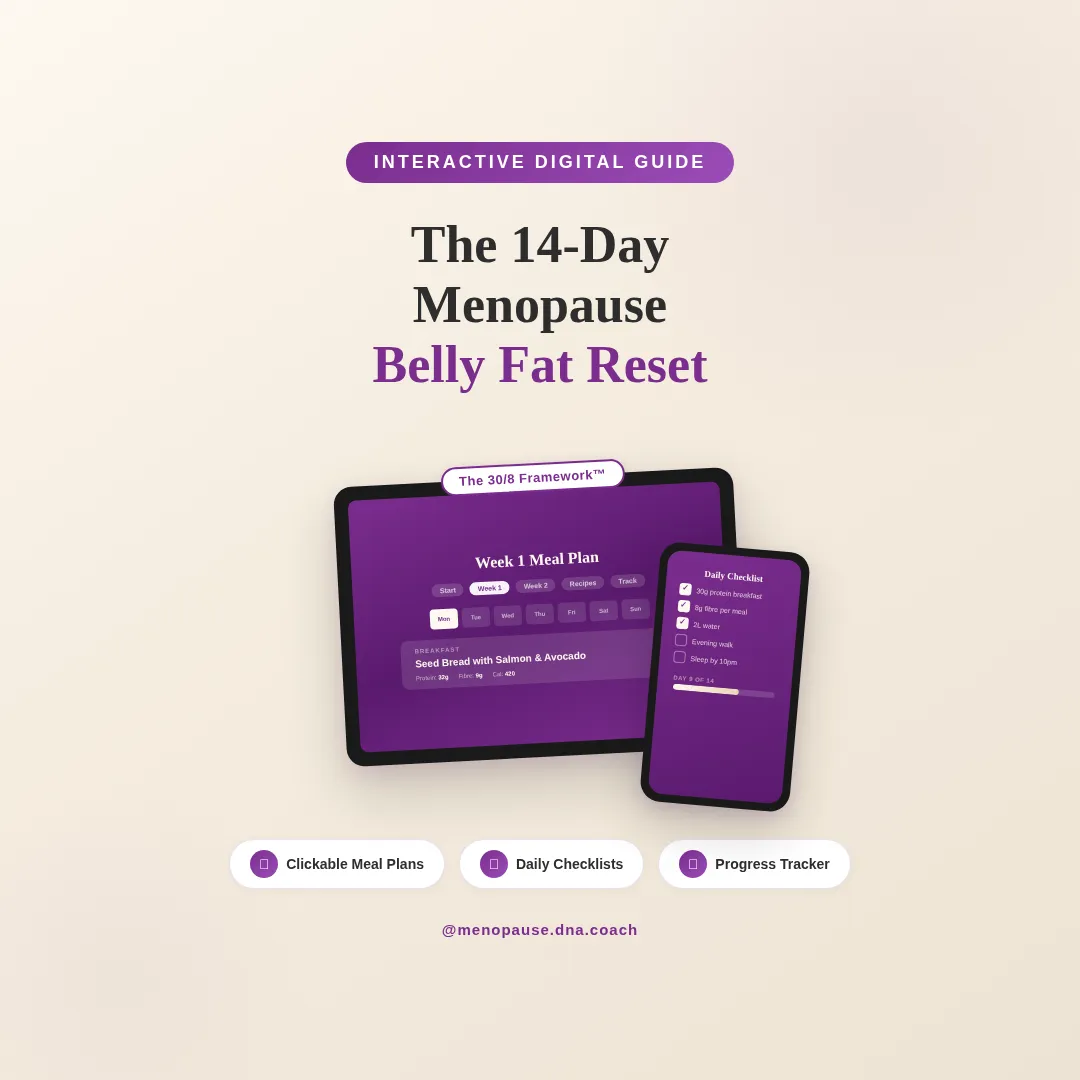
The 30/8 Menopause Fat Loss Engine
Are you losing fat, or losing muscle? Your calorie and macro targets worked out for your body, AI meal plans built on 30 g protein and 8 g fibre per meal, and fat versus muscle tracking every two weeks. Founding membership US$97.