
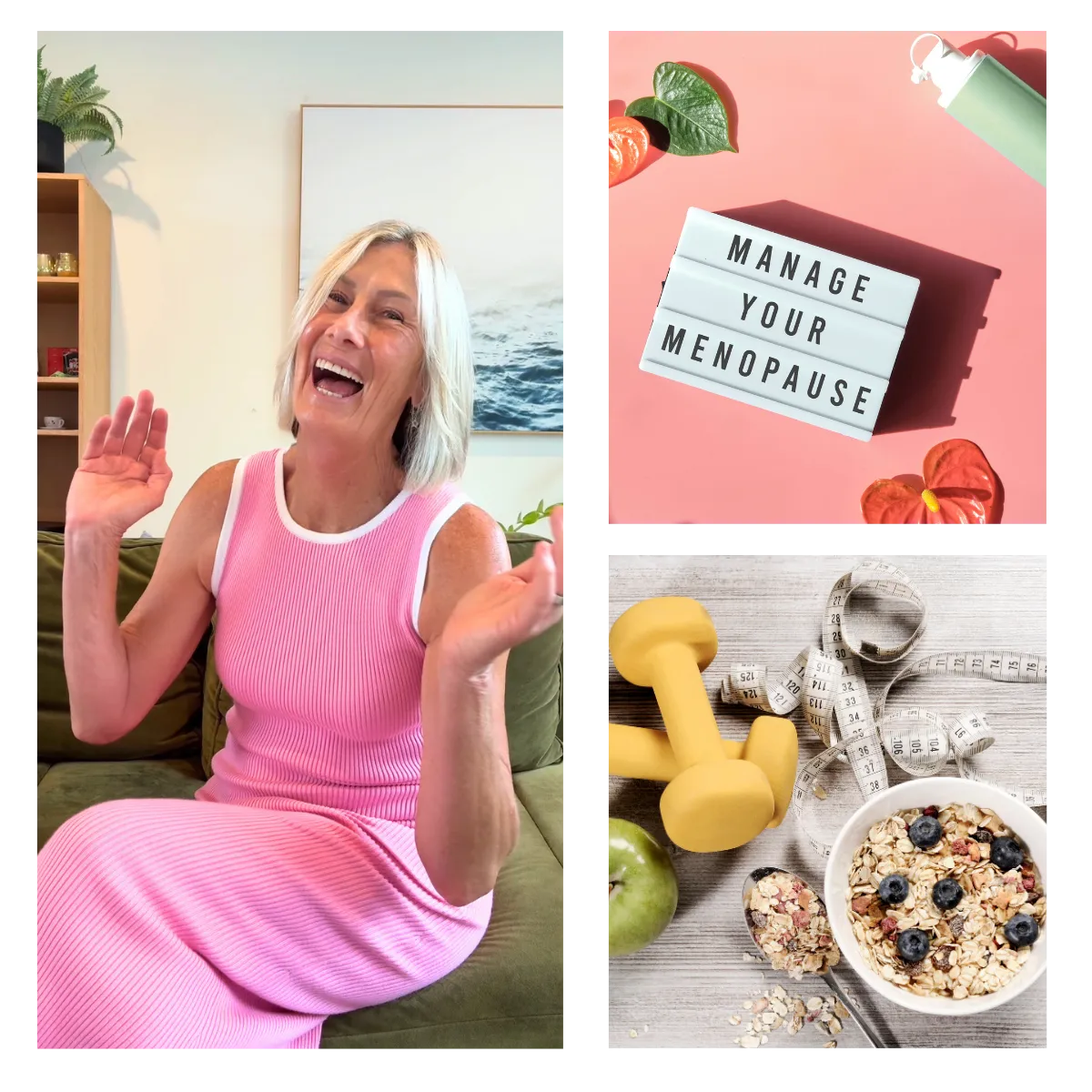
On this page you’ll see a collection of my personal programs and tools that I recommend and use.

These resources support gut–brain health, recovery, and personalised wellbeing during menopause and midlife.

They’re not requirements, but optional tools that align well with a DNA-guided, long-term approach to health.

The 3-Day DNA Alignment Quick Start

Uncover how hormonal shifts and individual biology influence weight, energy, mood, and metabolism, so you can stop blaming yourself and start supporting your body in a way that actually makes sense.

The 14-Day Menopause Belly Fat Reset $37

I spent years watching women do everything "right" and still gain weight through menopause. So I built the 30/8 Framework™ — 30g protein, 8g fibre per meal — because your body changed, and your nutrition needs to change with it.

Fitgenes DNA Testing

Fitgenes provides evidence-based DNA testing that helps explain why people respond differently to food, exercise, stress, and supplements. I’ve tested myself using Fitgenes, and it offered valuable insight into how genetic tendencies can influence metabolism, inflammation, mood, recovery, and long-term health.

During midlife and menopause, hormonal shifts can amplify these genetic tendencies, making generic advice feel less effective. What I appreciate about Fitgenes is that the reports focus on actionable health outcomes rather than overwhelming data. They align closely with nutrition, movement, and lifestyle strategies and allow for practitioner interpretation and personalisation.

Fitgenes testing is an optional enhancement in my work, used to validate why certain approaches feel easier or harder and to guide more targeted, sustainable health decisions.

To request a Fitgenes DNA Test from me, please email me at michelle@replies.michelle-dna-nutrition.com

Organifi

I use Organifi as a simple, supportive addition for women navigating menopause—particularly when energy, stress, recovery, and daily consistency need a little more support.

The blends I tend to use most are the Green, Red, and Gold, alongside their creatine gummies. Each plays a slightly different role, but all are designed to support how your body responds across the day.

The Green blend is something I use as part of a morning routine to support stress response, gut health, and steady energy—especially when mornings feel rushed or cortisol feels elevated.

The Red blend is useful around movement or in the afternoon, supporting circulation, energy, and recovery without relying on stimulants.

The Gold blend is something I see as more of an evening support—helping to wind down, support the nervous system, and promote better sleep quality, which becomes increasingly important during menopause.

I’ve also been incorporating their creatine gummies as a simple way to support muscle, energy production, and cognitive function—areas that naturally decline as we age and become a key focus after 45.

What I like about these products is their simplicity. They are not designed to replace food or fundamentals, but to support them—helping to create more consistent daily signals around energy, recovery, and stress.

As always, I see supplements as an optional layer. The foundations remain the same: protein, fibre, movement, light exposure, and daily habits that support how your body responds.

When used well, these can complement a personalised approach, particularly alongside the work I do around metabolism, hormones, and DNA-informed nutrition.

Amare

I use Amare as an optional support for women navigating menopause, particularly when there is a need to support gut health, metabolism, mood, and overall resilience.

My focus is on their collagen and the Ever Balance™ & GBX Slim2Fit™ system, which are designed to support multiple aspects of health including muscle, metabolic function, hormone balance, and mood.

What makes Amare different is its focus on the gut–brain connection. Rather than supporting digestion, metabolism, or mood in isolation, these formulations are designed to work across systems—supporting the relationship between the gut, brain, and metabolism, which becomes increasingly important during hormonal transition.

This can influence how the body responds to food, stress, energy demands, and overall wellbeing.

I see these products as a supportive layer—not a replacement for the foundations. Nutrition, movement, and daily habits always come first.

When used well, they can complement a personalised approach, particularly alongside DNA-informed strategies, helping to support the body in a more targeted and responsive way.

ROUGE Red Light Therapy

I purchased ROUGE red light therapy initially to support recovery from a plantar fascia tear, and it made a noticeable difference in my healing process. I’ve since used other settings for skin health and rejuvenation, and it has become a consistent part of my recovery and wellbeing routine.

ROUGE devices use clinically relevant red and near-infrared wavelengths that support cellular energy, circulation, and recovery. As mitochondrial efficiency naturally declines with age and hormonal changes, this type of light therapy can support energy levels, inflammation regulation, tissue repair, and sleep quality. I view red light therapy as an optional, supportive tool that works best alongside DNA-guided nutrition, movement, and stress regulation. Benefits tend to build gradually with regular, consistent use rather than intensity.